


How to Choose a Walk-In Bath: A Complete Buyer's Guide
Choosing a walk-in bath involves more decisions than most people expect. There are different types to consider, bathroom dimensions to assess, safety features to compare, and installation factors to think about — all before you look at specific models or request a quote.
This guide takes you through the process step by step, so you can make a well-informed decision and choose a bath that works for you long-term.
Step 1: Understand the Different Types of Walk-In Bath
Walk-in baths are not one size fits all. The main types available in the UK are:
Sit-in walk-in baths are the most compact option. The bath is deeper than a conventional bath but shorter in length, with a built-in seat that you sit on rather than lying flat. These fit into smaller bathrooms and suit anyone who primarily wants safe, seated bathing with the therapeutic benefits of warm water immersion.
Full-length walk-in baths are closer in size to a conventional bath, allowing the user to lie with legs extended. These are better suited to larger bathrooms and work well when multiple household members will use the bath.
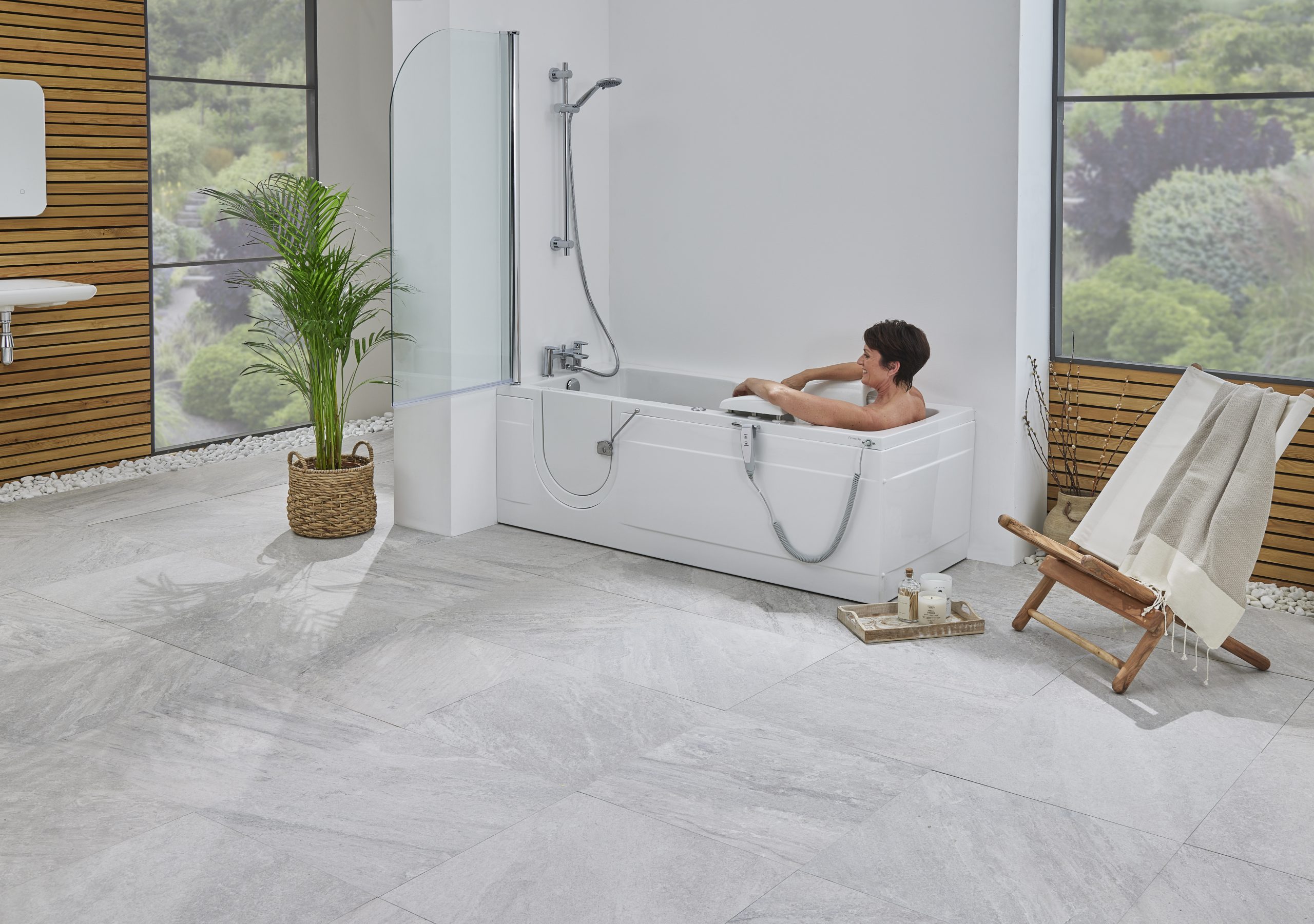
Power-assisted walk-in baths include an electrically powered seat that raises and lowers at the touch of a button. These are designed for people with more significant mobility limitations who find it difficult to lower themselves even into a standard walk-in bath seat.
Walk-in shower baths combine a walk-in bath with an integrated overhead shower, giving flexibility for different users or different occasions. Useful in households where one person wants to retain a full bath while another prefers a quick shower.
Step 2: Measure Your Bathroom Correctly
Before shortlisting models, take careful measurements of your bathroom. You need to know the overall floor dimensions, the position of existing plumbing (particularly the waste outlet), the height and position of any windows or radiators, and the width of the door through which the bath will be delivered.
That last point is often overlooked until installation day. A bath that fits beautifully in your bathroom is no use if it cannot be carried through the door. Our team checks all of this as part of the free home survey, so there are no surprises.
Step 3: Consider Your Mobility Needs Now and in the Future
One of the most important considerations is not just your current mobility, but where you might be in five or ten years’ time. A bath that works well now may become insufficient if your mobility reduces further.
Think about whether the entry threshold is low enough for your current range of movement, whether a standard or power-assisted seat will serve you better long-term, whether you may need carer assistance in the future and whether the bath accommodates that, and how easily you can operate the tap controls, door seal, and any additional features with your current hand strength and grip.
It is always better to choose a bath that offers a little more support than you currently need, rather than having to make another change in a few years.
Step 4: Assess the Key Safety Features
Safety is the primary reason most people invest in a walk-in bath, so these features deserve careful attention:
- Door seal and lock. The door must create a completely watertight seal when closed. Check how easy the mechanism is to open and close with limited grip or strength, and whether the lock can be operated comfortably.
- Anti-slip base. The floor of the bath should have a textured, non-slip surface to prevent sliding when seated or transferring weight.
- Grab rails. Rails should be included at the entry point and along the inside of the bath. Placement matters — they need to be positioned to suit the movements you will actually make.
- Seat height and stability. The seat should be at a height that allows comfortable sitting and standing without excessive effort. It must be fixed and completely stable — any wobble is unacceptable.
- Emergency drain. A fast-draining bath is important — if you need to exit quickly for any reason, you should not have to sit in water for an extended period waiting for it to drain.
Step 5: Understand What Installation Involves
A walk-in bath is not a straightforward like-for-like replacement for a standard bath. The installation typically involves adjustments to existing plumbing, possible tiling work around the new bath, additional electrical work if a power-assisted model is chosen, and the fitting of grab rails at structurally sound points in the wall.
A reputable installer will survey your bathroom in advance and explain exactly what the work involves, how long it will take, and whether there is anything you need to arrange in advance. If a company jumps straight to a quote without a proper survey, treat that as a warning sign.
Step 6: Ask About Warranty and Aftercare
A walk-in bath is a significant investment and you want to know it is backed by proper support after the work is done. Before committing, make sure you know what the product warranty covers and for how long, what the installation warranty covers, how quickly any issues will be attended to, and whether the company is established, local, and contactable.
At Assisted Living Ltd, we are a family-run business based in West Yorkshire. You will always speak to someone who knows your installation and can help you promptly if anything needs attention.
Ready to Take the Next Step?
If you are considering a new bathing solution, our team at Assisted Living Ltd is here to help. We offer a free home survey and 3D bathroom design with no obligation. Call us on 0800 980 6890 or contact us online to arrange a visit at a time that suits you.