


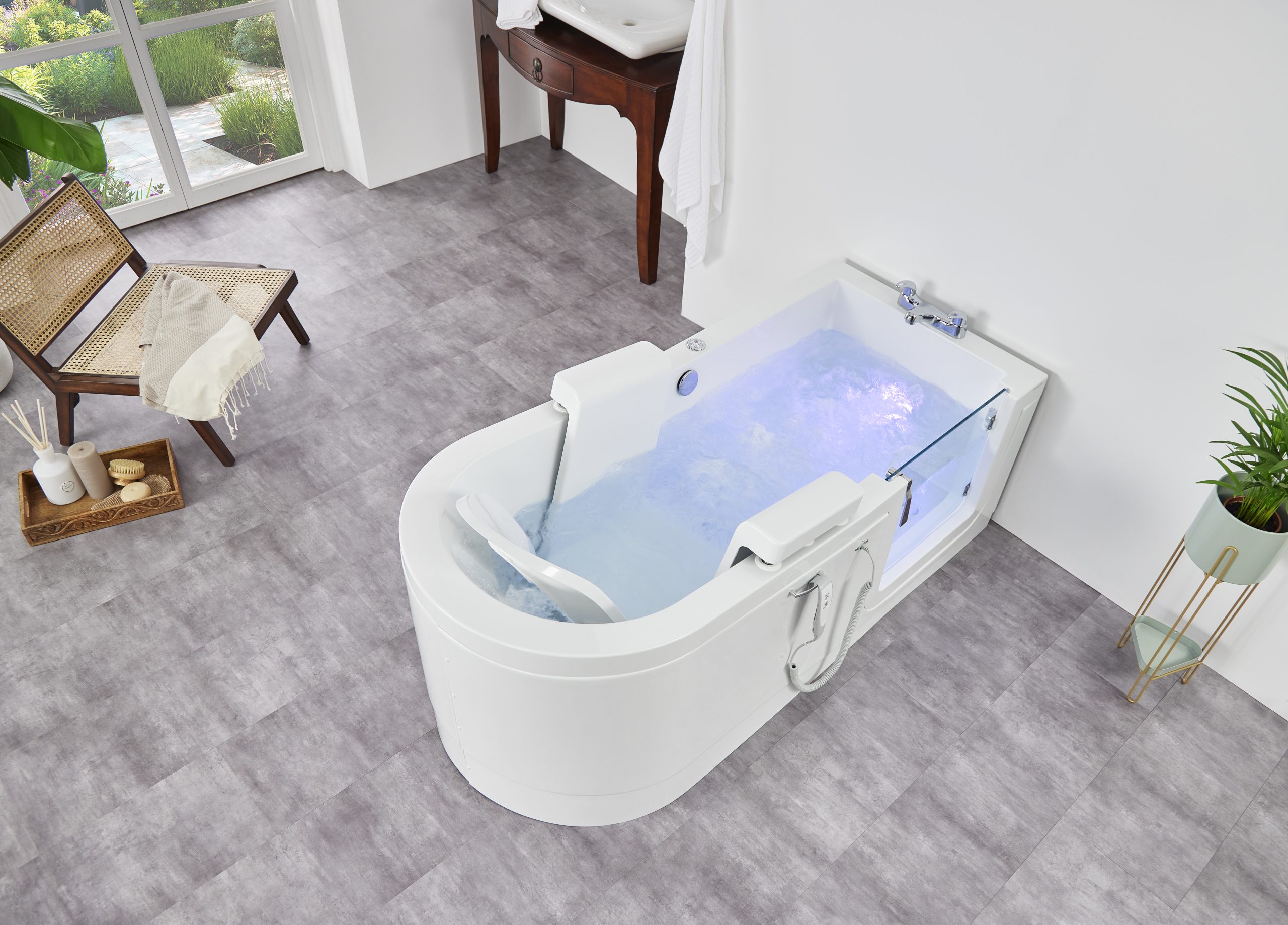
Walk-In Baths for Arthritis: What to Look For and Why They Help
For many people living with arthritis, getting in and out of a traditional bath is no longer straightforward. Stiff joints, reduced grip strength, and the pain of twisting or bending can make bathing difficult and, in some cases, genuinely unsafe. A walk-in bath can make a significant difference — not just in terms of safety, but in comfort, confidence, and independence at home.
This guide explains how walk-in baths can help with arthritis, what features to prioritise, and what to consider before making a decision.
How Arthritis Can Affect Bathing
Arthritis causes inflammation and stiffness in the joints, which can make everyday tasks that require bending, gripping, or standing for extended periods painful and difficult. The bathroom — with its high bath sides, slippery surfaces, and restricted space — is one of the most challenging environments for anyone living with arthritis.
Common difficulties include stepping over the rim of a standard bath, lowering down into the water and rising from it, turning taps and handling toiletries, and maintaining balance on wet surfaces. Many people begin to avoid bathing altogether over time, which has an impact on both comfort and wellbeing.
Why a Walk-In Bath Can Help
A walk-in bath is designed with accessibility at its core. Rather than climbing over a high edge, you step through a side-opening door with a low or near-level threshold and take a seat before the bath fills. This removes the biggest single risk for arthritis sufferers: the step-over movement that places the most stress on hips and knees.
Because you are seated throughout the entire bathing process, the effort required to lower yourself into the water and rise from it is dramatically reduced. For many people with arthritis, this transforms bathing from something to dread into something manageable again.
Warm water immersion also has a well-established therapeutic effect on arthritic joints. Soaking in warm water increases circulation, relaxes muscles, reduces joint stiffness, and can ease pain noticeably. Some walk-in baths include hydrotherapy jets that enhance this effect further.
Key Features to Look For in a Walk-In Bath for Arthritis
Not all walk-in baths suit arthritis equally well. When comparing options, these features matter most:
- Low or zero-threshold entry. The step height should be as low as possible — ideally 100mm or less. The lower the threshold, the less stress is placed on arthritic hips and knees when stepping through the door.
- Integrated seat at a comfortable height. The built-in seat should allow you to sit and rise without excessive bending. A seat that sits too low can be just as challenging as a conventional bath.
- Grab rails and support handles. Rails should be positioned at the door entry point and along the interior of the bath, allowing you to steady yourself both on entry and when manoeuvring inside.
- Lever or push-button tap controls. Standard tap handles can be extremely difficult to operate with arthritic hands and fingers. Lever-style taps or thermostatic controls that require minimal grip are significantly easier to manage.
- Hydrotherapy jets. If joint pain is significant, a bath with built-in jets provides a warm-water massage that can help ease inflammation and improve mobility both during and after bathing.
- Anti-slip flooring. The interior base of the bath should have a textured, non-slip surface to prevent any risk of sliding when seated or standing.
- Easy-seal door mechanism. The door should be straightforward to open and close without tight gripping or twisting, reducing strain on arthritic hands and wrists.
Walk-In Bath or Walk-In Shower: Which Is Better for Arthritis?
This depends on your specific circumstances. For arthritis sufferers who value the therapeutic benefits of warm immersion, a walk-in bath is typically the better choice. The ability to soak in hot water is something a shower cannot replicate, and for joint pain in particular, it makes a meaningful difference.
However, for those whose primary concern is safety and quick access rather than immersion, a walk-in shower or wet room is a simpler and faster option. Some people choose both — a wet room conversion for daily showering and a walk-in bath for therapeutic bathing when needed.
Our team can help you think through the right choice based on your bathroom size, your mobility needs, and how you prefer to bathe.
What to Expect from Installation
A walk-in bath installation is carried out by specialist fitters and typically takes one to two days. Our team begins with a free home survey to assess your bathroom layout, measure the available space, and understand your individual requirements. We then recommend the most suitable options and provide a no-obligation quote before any work begins.
All installations include professional fitting of the bath, plumbing connections, grab rail positioning, and a full walk-through to make sure you are completely confident using everything before we leave.
Ready to Take the Next Step?
If you are considering a new bathing solution, our team at Assisted Living Ltd is here to help. We offer a free home survey and 3D bathroom design with no obligation. Call us on 0800 980 6890 or contact us online to arrange a visit at a time that suits you.